If you’re thinking about buying a duplex, triplex, or fourplex in Portland, Oregon, one of the first questions you may ask is: Which type of property is going to make me the most money?
Is a duplex better than a fourplex? Is a fourplex the better investment because it has more units? What about a triplex—the middle ground between the two?
The answer is more nuanced than simply choosing the property with the most units.
After years of buying, managing, selling, and analyzing 2–4 unit properties, I’ve come to believe that the number of units is important—but it isn’t the most important factor. When I evaluate a Portland duplex, triplex, or fourplex investment, I’m much more interested in the location, building quality, demand, deal structure, and opportunity to improve the property.
Price Per Unit: Why Fourplexes Can Have an Advantage
One of the first metrics I look at when comparing small multifamily properties is price per unit.
For example, imagine a single-family home selling for $500,000. That is $500,000 per unit.
Now imagine a duplex selling for $650,000. That’s $325,000 per unit.
A fourplex selling for $900,000 would be only $225,000 per unit.
These are hypothetical examples, but they illustrate an important concept: as the number of units increases, the price per unit often decreases.
That can make a fourplex particularly attractive to an investor looking to maximize the amount of rental real estate acquired for each dollar invested.
Of course, price per unit is only one part of the equation.
Rent Per Unit vs. Total Rental Income
The next question is how much each unit can actually rent for.
A single-family home might rent for $3,000 per month.
A duplex might have two units renting for $2,200 each, producing $4,400 in total monthly rent.
A fourplex might have four smaller units renting for $1,900 each, producing $7,600 in total monthly rent.
Notice what happens.
The rent per unit decreases as the properties become smaller and more apartment-like, but the total rental income increases because you’re collecting rent from more units.
This is one of the fundamental reasons investors are attracted to Portland fourplexes and other small multifamily properties.
However, there is another important consideration: how the property lives to the tenant.
A well-designed duplex can feel much more like a home than an apartment. That can create a better rental experience and allow the owner to command higher rents per unit.
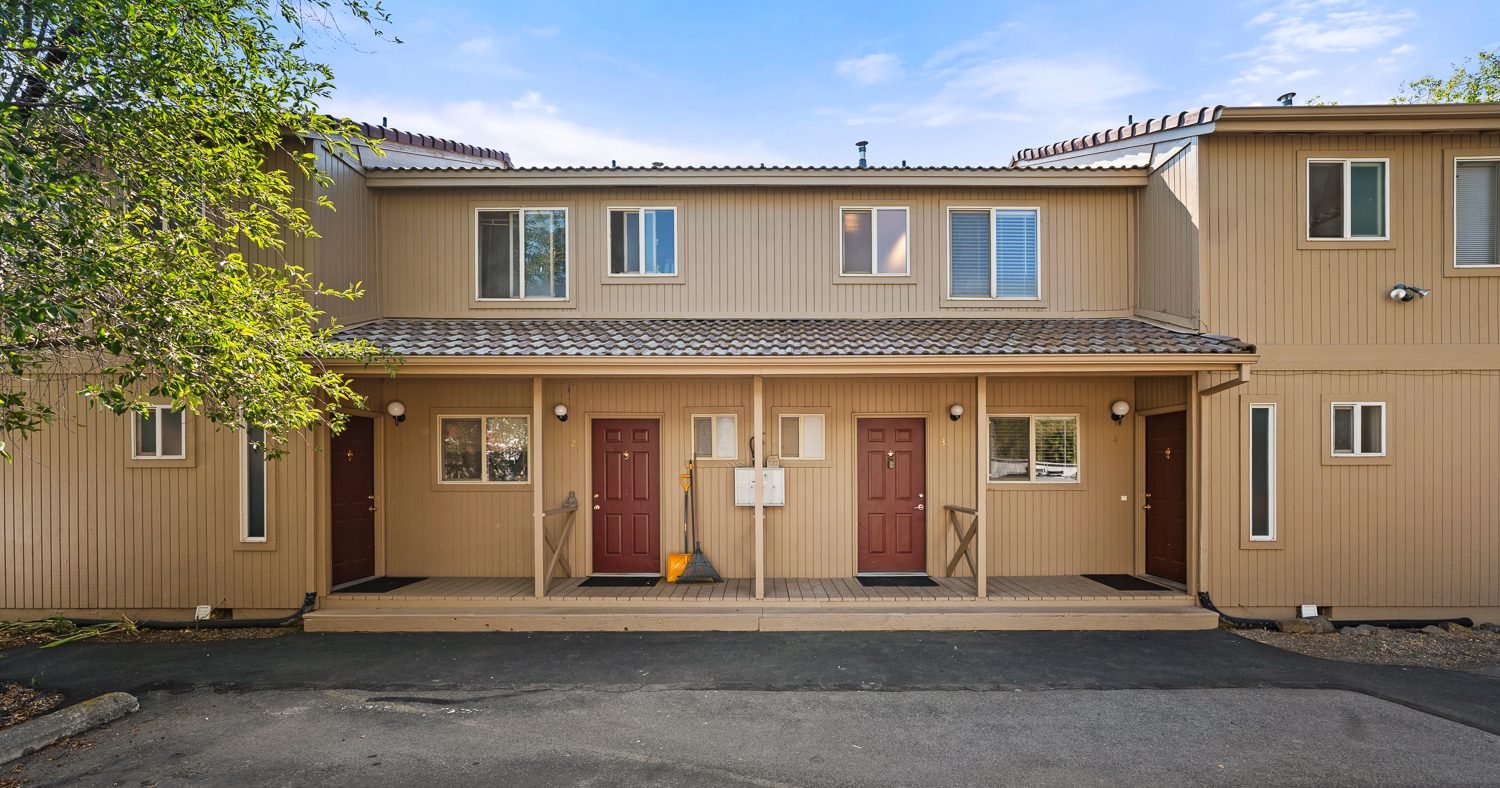
A fourplex, on the other hand, may feel more like an apartment building—but not always. Some fourplexes have two-story, townhome-style layouts that provide a much more residential feel.
So when you’re looking at a fourplex for sale in Portland, don’t just count the units. Pay attention to the actual configuration of those units.
What Does “Making Money” Really Mean?
When comparing a duplex versus a fourplex investment, it’s important to define what you mean by “making money.”
Cash flow is certainly one component. Ideally, your rental income exceeds your operating expenses and debt service, leaving you with positive monthly cash flow.
But cash flow isn’t the only way rental real estate creates wealth.
Principal Paydown
When tenants pay rent and that rent helps cover your mortgage payment, part of the payment goes toward reducing the loan balance.
Over time, you build equity through principal paydown.
Forced Appreciation
Another powerful strategy is what investors often call forced appreciation or equity creation.
Maybe you purchase a property at $600,000 and identify relatively straightforward improvements that could increase its value to $750,000.
Those improvements could involve the physical property, the rents, the management, or some combination of the three.
For a Portland duplex, triplex, or fourplex, that might mean improving a unit, increasing rents toward market levels where appropriate, adding laundry income, finishing usable space, or making other improvements that increase the property’s income or appeal.
Appreciation
Market appreciation can also create wealth, although future appreciation is never guaranteed.
The important point is that percentage appreciation applies to the value of the entire property.
A 5% increase on a $650,000 duplex is different in dollar terms from a 5% increase on a $900,000 fourplex.
Tax Benefits
Rental property ownership can also provide tax benefits, including deductions related to interest and depreciation. The specific tax consequences depend on your situation, so investors should discuss these issues with their tax professional.
When evaluating a small multifamily investment, I think it is a mistake to focus exclusively on monthly cash flow.
So, Is a Duplex or Fourplex Better?
Here’s where I think the comparison gets interesting.
A duplex generally has a higher price per unit, but a lower total purchase price. Its units may also feel more like homes, which can support higher rents per unit.
A fourplex generally has a lower price per unit, more total rental income, and a larger asset value. But it also requires more capital to purchase, and the individual units may feel more like apartments.
Neither of those characteristics automatically makes one a better investment.
The same is true for a triplex.
A great triplex in an excellent Portland neighborhood with strong rents, desirable units, and an attractive purchase price can be a substantially better investment than a mediocre fourplex in a weak location.
The Four Things I Look For in a Small Multifamily Investment
Rather than asking, “Should I buy a duplex or fourplex?” I suggest asking four different questions.
1. Is it in a great location?
Demand matters enormously. I want to see evidence that people actually want to live there. Strong rental demand can make leasing easier and help support long-term investment performance.
2. Is it a quality building?
The property doesn’t have to be perfect. In fact, some of the best opportunities aren’t.
But I want a building with desirable characteristics, curb appeal, functionality, and something that makes people want to live there.
3. Is there a good deal structure?
The purchase price isn’t the only thing that determines whether you’re getting a good deal.
Financing terms, seller financing, secondary financing, credits, and other creative deal structures can all affect the economics of an investment.
4. Is there a vision for making it better?
This is one of my favorite questions.
Maybe the property needs new paint and landscaping. Maybe one unit could be reconfigured. Maybe there’s unfinished basement space. Maybe adding laundry could create another income stream.
The improvement doesn’t necessarily have to be dramatic.
Sometimes the best investment is simply a good property that can be made noticeably better without taking on a massive renovation.
Don’t Limit Yourself to One Property Type
If you’re looking for a duplex for sale in Portland, Oregon, don’t automatically eliminate fourplexes.
If you’re searching for a Portland fourplex, don’t assume every fourplex is a better investment than every duplex.
And if you’re considering a triplex investment, don’t overlook the opportunities that may exist in either direction.
Instead, compare the actual properties.
Look at the location. Look at the rents. Look at the price per unit. Look at the condition. Look at financing. Look at operating expenses. Look at the potential for increasing income or value.
Then ask the most important question:
Does this particular property have the combination of fundamentals and opportunity that makes sense for my investment goals?
That’s how I approach Portland duplexes, triplexes, fourplexes, and small multifamily real estate.
The goal isn’t to find the “best” property type.
The goal is to find a great property, in a great location, at a good price, with a good structure and a clear vision for making it even better.
And if you can find that combination in a duplex, buy the duplex.
If you find it in a triplex, buy the triplex.
If you find it in a fourplex, buy the fourplex.
That’s where the real opportunity lies.